

Already in 2017, McKinsey found that automation will change most professions in the next 10 years.
The DS4Skills initiative is on a mission to create a blueprint for building the European data skills space future-proof through guidelines on how it can best be developed and utilised in different areas of society. As the data space for skills is developing, the collaboration between different actors, approaches and methodologies is essential for an accurate and holistic understanding of the topic. By bringing together the stakeholders in skills data from both the public and the private sector, DS4Skills is aiming to build the ground for systemic solutions in data spaces by providing a complete overview of the ecosystem that benefits all.
The past few years have shown that the future of work looks radically different from its current state, with McKinsey evaluating already in 2017 that approximately 50% of current jobs are automatable by leveraging current technologies available, and 6 out of 10 occupations could be automated by more than 30%. The numbers based on a calculation today are likely to be even higher.
Technological leaps result in the emergence of new and innovative possibilities for people to interact with technology, as well as a number of new occupations and opportunities that replace the loss of others. With the current speed of change, it is in the interest of private and public actors alike to tap into these opportunities as soon as possible to stay at the forefront of society in their respective fields, and the DS4Skills initiative rose from this increasingly important role of quick adaptation of societal actors to change.
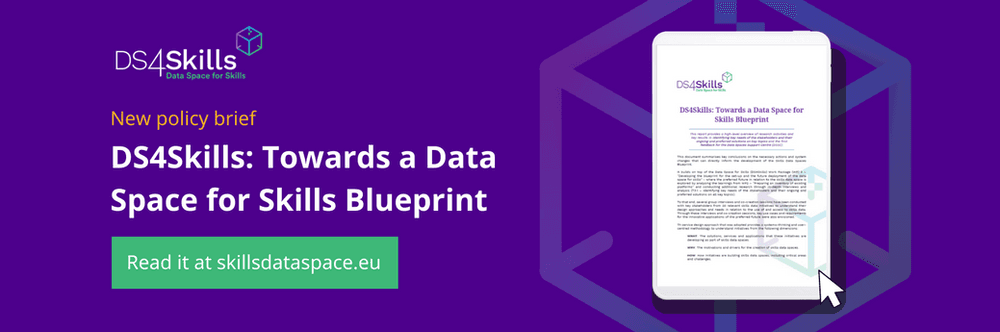
As a part of the project, DS4Skills launched a policy brief in July 2023 to provide findings and recommendations for the Data Space for Skills Blueprint for decision-makers in relation to building a sustainable and ethical data space for skills as well as identifying and leveraging current and future changes in the aspect of labour. The brief was concluded through extensive research, interviews, and co-creation by the DS4Skills project partners using their respective areas of expertise. As a project partner and expert in AI-assisted data analysis, Headai is working to identify relevant data sources for the skills data space and propose conceptual approaches for the European Data Space for Skills that can serve both public and private stakeholders in different fields in an ethical manner.
The report led to recommendations for the Data Spaces Support Centre (DSSC) on seven core themes identified for developing a data space for skills from the perspective of policymakers. In line with the collaborative nature of the project, partner organisations contributed to the themes according to their respective specialisations, with Headai’s focus being on Building blocks for skills data spaces including standard elements, human centricity, AI, and Personal Data Intermediaries, as well as the varied business models in skills data initiatives. These blocks emphasise particularly the aspect of leveraging technology and particularly AI-based solutions not to replace human labour, but to elevate human capabilities by technological means to reach levels of advancement that have a positive impact on people’s lives and society as a whole.
Headai has been a leader in building a data space for skills both on a local level in Finland and globally since 2017. The current EU-level initiative gives the opportunity to reinforce the existing local practices with the learnings and frameworks created across borders and to share the important learnings the diverse actors in the skills data space have already acquired. With a strong basis already in place, Finland has the potential to reinforce even further its role within an internationally growing field by taking the learnings from DS4Skills’ policy brief into current and future initiatives.
Our question is: are we ready to take on this challenge? Share your thoughts and questions with us and together, let’s create the solutions of tomorrow for leveraging skills data even better through strong and efficient public-private partnerships.

Helping YTK members find work that matches their real skills

Turning fragmented skills data into shared decisions with LEADSx2030

Seeing what's actually happening in an industry, before it shows up in official statistics
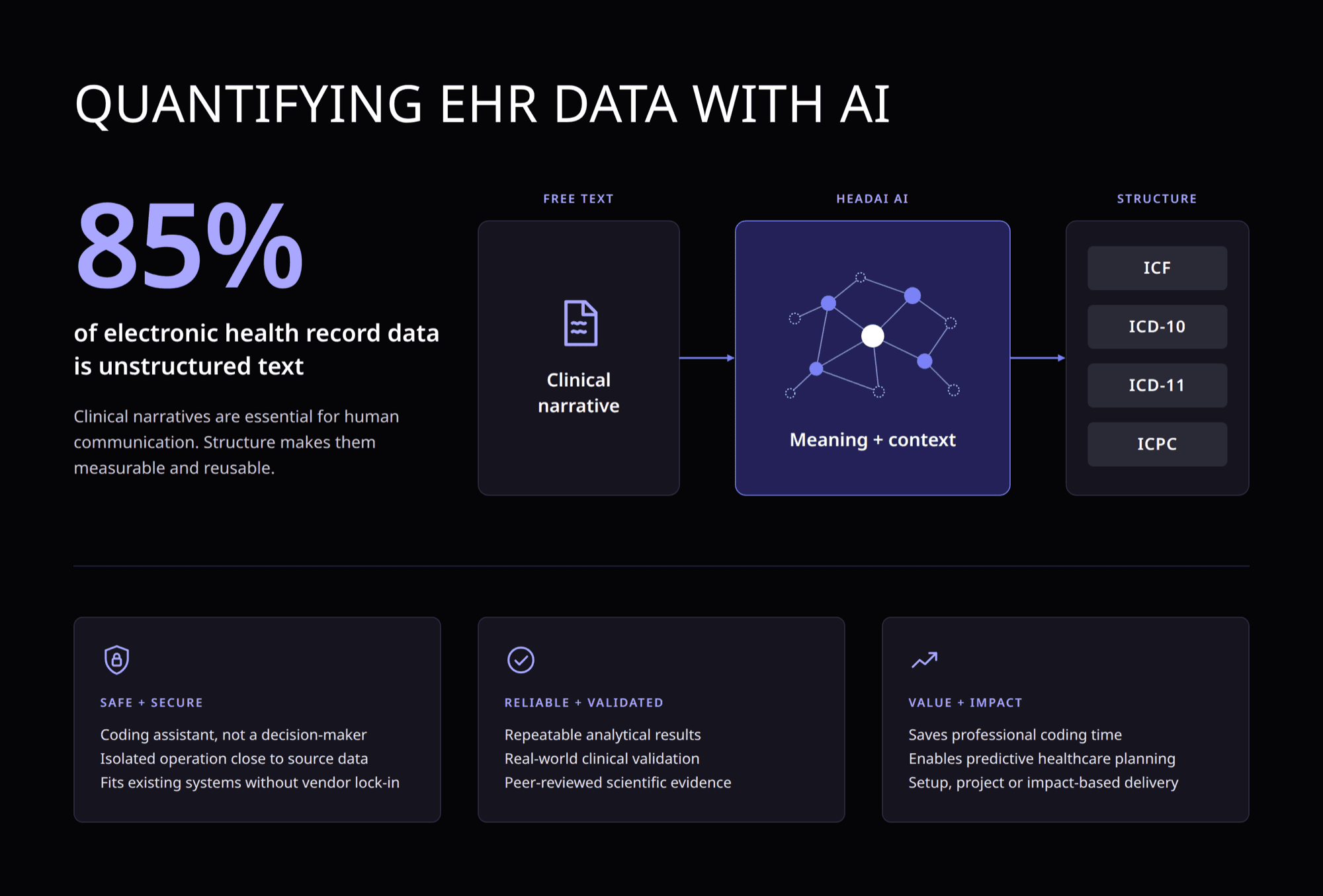
Turning clinical notes into explainable ICF and ICD codes

Consistent where generative AI is not: keywording 5,585 project applications